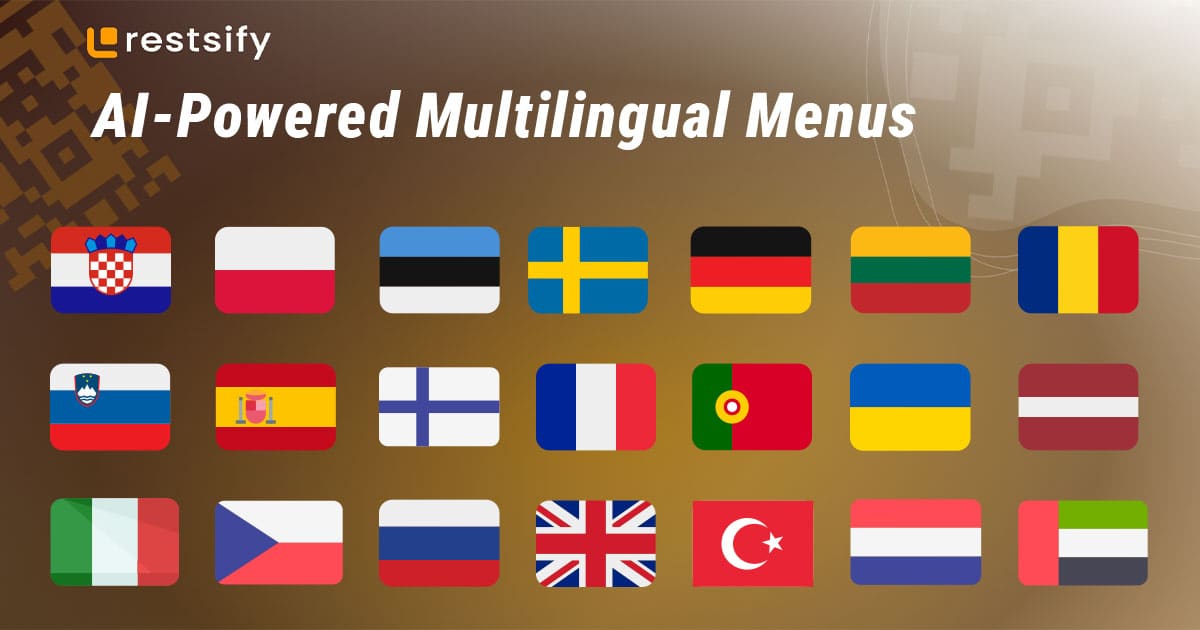
As international travel continues to expand and dining audiences become increasingly diverse, restaurants face a growing challenge: how to communicate clearly with guests who speak different languages. Traditional printed menus often fail to provide accurate translations, and maintaining multiple physical versions can be expensive and inefficient. This is where multilingual digital menus are transforming the modern dining experience.
A multilingual digital menu automatically adapts to the guest’s preferred language, creating a seamless and intuitive browsing experience. Instead of asking staff for translations or relying on guesswork, visitors can explore dishes, ingredients, and pricing in a language they fully understand. This clarity reduces ordering mistakes, increases confidence, and enhances overall satisfaction.
Modern platforms use intelligent language detection combined with structured translation systems to ensure consistency and accuracy. Restaurants can manage content centrally while offering a wide range of supported languages. This approach eliminates the operational complexity of maintaining separate menu versions and ensures that updates are reflected instantly across all translations.
Design remains equally important in multilingual environments. Restaurants benefit from mobile-optimised restaurant menu templates that maintain visual balance and readability across different languages, even when text length varies significantly. These templates ensure that translated content remains clean, structured, and easy to navigate. Discover how mobile-optimised restaurant menu templates for multilingual dining support both performance and design consistency: Mobile-optimised restaurant menu templates.
Beyond translation, multilingual digital menus integrate seamlessly with analytics tools. Restaurant operators can analyse which languages are most frequently selected, how international guests interact with menu categories, and which items perform best among different audiences. These insights help businesses adapt their offerings and marketing strategies based on real behavioural data rather than assumptions.
Comprehensive solutions combine localisation, analytics, design flexibility, and performance optimisation into a unified ecosystem. By centralising these features, restaurants gain full control over their digital presence while maintaining scalability. Learn more about digital menu platform features for restaurants that integrate multilingual functionality with advanced management tools: Digital menu platform features for restaurants.
Multilingual support is particularly valuable in tourist destinations, airport locations, hotel restaurants, and globally influenced urban areas. A single QR code can lead guests to a menu that automatically adapts to their device language settings. This automation removes friction from the ordering process and contributes to a more inclusive hospitality environment.
To explore how automatic language detection and translation enhance clarity for diverse customer groups, review how multilingual digital menus for international guests create a smoother and more accessible dining experience: Multilingual digital menus for international guests.
As restaurants continue to modernise their operations, multilingual digital menus are becoming more than a convenience feature. They represent a strategic investment in accessibility, customer satisfaction, and global readiness — enabling hospitality businesses to communicate effectively in an increasingly connected world.