
ABS injection molding is one of the most widely used manufacturing processes for producing high-strength, impact-resistant, and finely detailed plastic components.
Known for its excellent machinability, stable performance, and balanced material properties, ABS (Acrylonitrile Butadiene Styrene) has become a top choice for automotive parts, consumer electronics, appliances, toys, medical devices, and countless industrial applications.
Whether you’re designing a new plastic component or looking for a reliable manufacturing method for existing products, understanding how ABS injection molding works—and why it is so popular—will help you make more informed decisions. This guide explains the material, process, advantages, applications, and key considerations for achieving high-quality ABS molded parts.
What Is ABS and Why It’s Ideal for Injection Molding?
ABS is an engineering thermoplastic made from three monomers:
Acrylonitrile – heat resistance and chemical stability
Butadiene – toughness and impact strength
Styrene – rigidity and a smooth, glossy finish
This unique combination gives ABS an excellent balance of strength, durability, and aesthetic appeal. It is easy to mold, tolerates complex geometries, and supports a wide range of finishing techniques such as painting, plating, laser engraving, and texture etching.
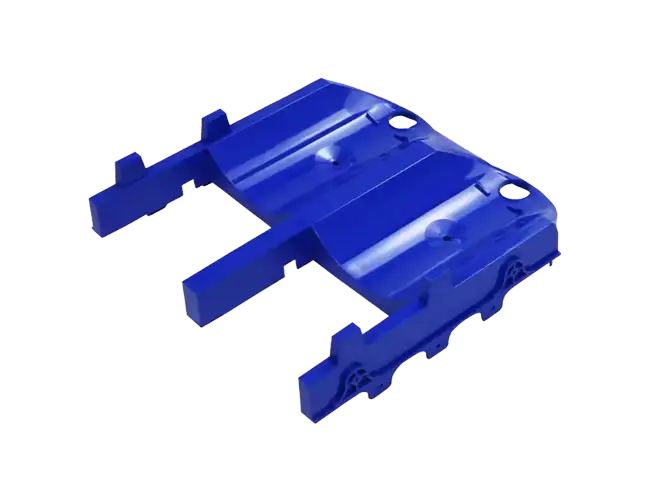
ABS is favoured in injection molding because:
It flows well during molding
It cools quickly
It offers good dimensional stability
It supports tight tolerances
It is cost-effective for mass production
With the right mould design and process parameters, ABS parts can be produced at high speed while maintaining consistent quality.
How the ABS Injection Molding Process Works
Although ABS injection molding follows the general principles of plastic injection molding, the material has some characteristics that require special attention. Here’s how the process works:
1. Part Design & Engineering
The success of any injection molding project starts with proper part design. For ABS, engineers consider:
Wall thickness consistency (typically 1.2–3.5 mm)
Draft angles to ensure easy release
Reinforcement ribs for added strength
Gate placement and flow path
Avoiding sharp corners to reduce stress concentrations
A good design reduces defects and speeds up production.
2. Mould Fabrication
ABS moulds are commonly made from hardened steel or aluminium, depending on production volume. The mould includes:
Cavity and core
Cooling channels
Ejector pins
Gates and runners
Proper cooling is crucial for ABS because uneven temperatures may cause warping or shrinkage.
3. Material Drying
ABS must be dried before molding to prevent moisture-related defects. Typical drying conditions are:
80–90°C for 2–4 hours
If moisture is trapped in the resin, it may cause bubbles, surface splay, or reduced strength.
4. Injection Molding Process
Once the material is prepared, the injection molding cycle begins:
Melting – ABS melts at 200–240°C, depending on grade
Injection – molten resin is injected into the mould under high pressure
Cooling – the part solidifies as cooling channels regulate temperature
Ejection – ejector pins release the molded part smoothly
Repeat cycle – cycle times typically range from 20–60 seconds
ABS is stable during molding, making the process efficient and predictable.
5. Finishing & Secondary Operations
ABS supports a wide variety of finishing techniques, including:
Chrome plating
Painting or custom colours
Pad printing
Laser marking
Texturing
Ultrasonic welding
Mechanical assembly
This versatility is one reason ABS is used across so many industries.
Advantages of ABS Injection Molding
ABS offers a combination of mechanical and aesthetic benefits that make it ideal for both functional and cosmetic applications.
✔ Excellent Impact Strength
ABS is tough and can withstand sudden force without cracking. This makes it suitable for protective housings, handles, and structural parts.
✔ Strong and Durable
It offers good rigidity, dimensional stability, and long-term durability even under mechanical stress.
✔ Smooth Surface Finish
ABS produces a naturally glossy and attractive surface, making it perfect for consumer products.
✔ Easy to Process
Compared to other engineering plastics, ABS flows well, cools quickly, and is forgiving during molding—reducing the likelihood of defects.
✔ Cost-Effective
ABS is affordable, and the fast cycle times reduce overall production cost.
✔ Highly Versatile
You can modify ABS with additives for:
UV resistance
Flame retardancy
Heat resistance
Higher impact strength
Reinforced strength (glass-filled ABS)
✔ Excellent Compatibility with Finishing
Few plastics match ABS when it comes to paintability and plating capability.
Common Applications of ABS Injection Molding
ABS parts are found in nearly every major industry. Its balance of cost, durability, and aesthetic appeal makes it the go-to material for millions of products.
Automotive
Dashboard components
Grilles and trims
Interior panels
Sensor housings
Consumer Electronics
TV frames
Computer keyboards
Remote controller casings
Router and modem enclosures
Household Appliances
Vacuum cleaner housings
Kitchen appliance parts
Tool handles
Toys
LEGO bricks (one of the most iconic ABS products)
Educational tools
Model kits
Medical & Laboratory Equipment
Instrument enclosures
Connectors
Device housings
Industrial Equipment
Fasteners
Panel covers
Mechanical housings
ABS is widely used because it supports both functional and cosmetic requirements.
Common Defects in ABS Injection Molding and How to Prevent Them
While ABS is easy to mold, incorrect settings can lead to defects. Here are common issues and solutions:
1. Warping
Cause: Uneven cooling
Solution: Optimise cooling channels, reduce injection speed, adjust mould temperature
2. Sink Marks
Cause: Thick sections or insufficient packing
Solution: Add ribs, maintain uniform wall thickness, increase packing pressure
3. Flow Lines
Cause: Low temperature or slow injection speed
Solution: Increase melt temperature and injection speed
4. Weld Lines
Cause: Resin meeting from multiple flow fronts
Solution: Adjust gate location or increase injection pressure
5. Bubbles or Splay
Cause: Moisture in the resin
Solution: Proper drying before molding
A skilled injection molding provider will fine-tune parameters to minimise defects.
Choosing the Right ABS Injection Molding Supplier
To ensure high-quality parts, choose a supplier with:
✔ Strong engineering capabilities
DFM analysis
Moldflow simulation
Material recommendations
✔ In-house tooling
Faster turnaround and better quality control.
✔ Advanced machines and process control
Electric or hybrid injection molding machines offer superior accuracy.
✔ Experience with ABS material grades
Different grades require different settings and handling.
✔ Comprehensive quality inspection
Dimensional checks, material verification, and full documentation.
A professional molding partner ensures consistent, defect-free ABS parts.
Conclusion
ABS injection molding is one of the most reliable and versatile manufacturing processes for producing strong, durable, and aesthetically appealing plastic parts. With its excellent balance of impact strength, rigidity, surface quality, and cost-effectiveness, ABS is ideal for everything from automotive components and electronics to toys and industrial products.
By working with the right injection molding partner and following optimal design and processing strategies, you can achieve high-performance ABS components that meet the demands of today’s fast-paced, competitive markets.


